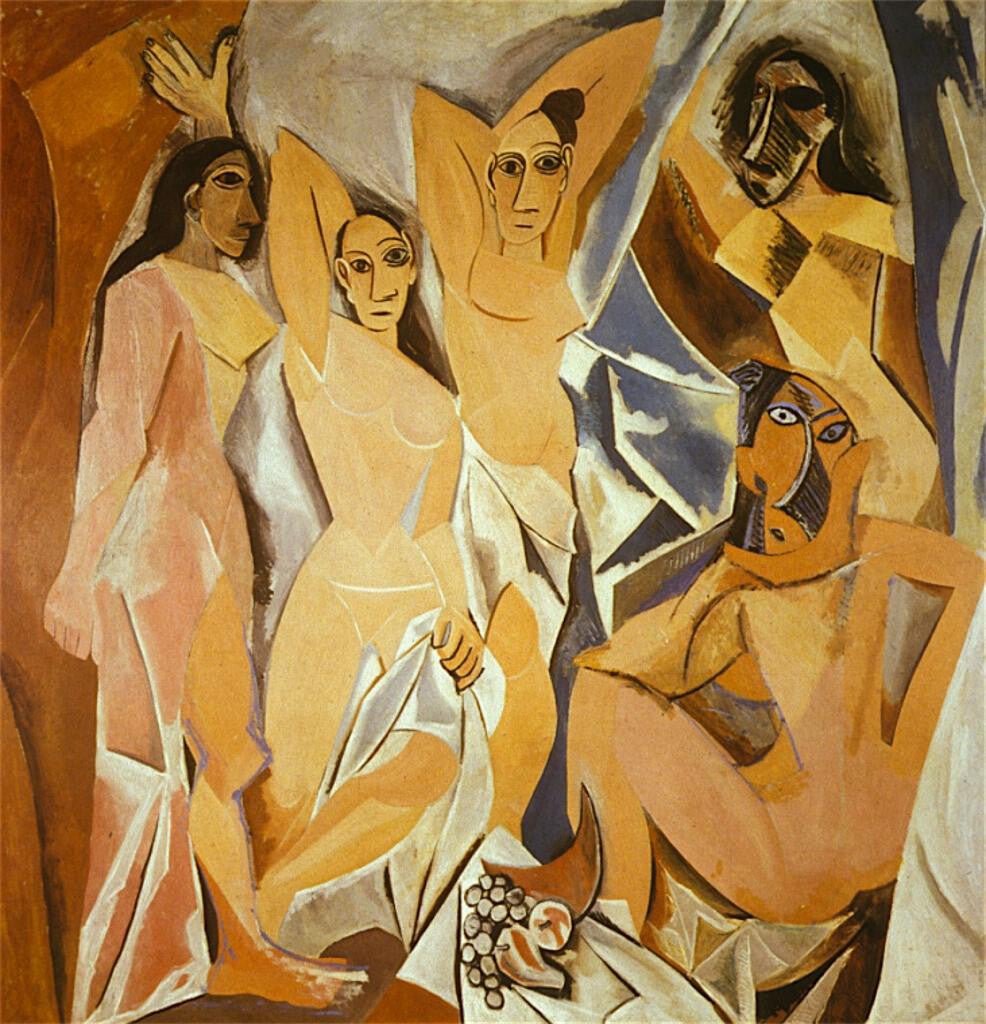
The transformative energy that enhances Guided Imagery on this site is rooted in Gestalt principles and the power of the 'Aha' moment — those flashes of insight that reveal new perspectives and understanding.
In 1908, Pablo Picasso faced a restless yearning he could not name. Driven by a desire to break boundaries, he ventured beyond his familiar world and traveled to Africa. In a shadowy, dust-laden, moldy room, he encountered African masks — an encounter that transformed his understanding of art. Painting became more than a pursuit of beauty; it became a kind of magic, a force of liberation.
Picasso liberated himself from the constraints of Western artistic tradition, awakening his creative spirit by attuning to the voices and heritage of Africa’s ancestors. By embracing the unfamiliar, he discovered hidden dimensions within himself.
From that pivotal Aha moment, Picasso recognized that his true artistic path had come into focus.
This journey propelled Picasso into his renowned African period — a brief yet electrifying chapter that sparked a profound fascination with African art, masks, and sculpture, fueling his imagination for years afterward.
With Les Demoiselles d’Avignon, Picasso shattered centuries of artistic convention, boldly transcending Renaissance naturalism and challenging viewers to reconsider the very boundaries of art itself.
“Therefore let us go to him outside the camp and bear the reproach he endured” Hebrews 13.
Picasso rolled up the canvas and concealed it in his studio for years, its radical vision startling even his closest companions. Yet, this work became the foundation for many of his later masterpieces.